 How-to
Termite Damage in Perth Homes: How to Spot the Signs
Last Updated: November 14, 2026
Quick Summary
You can identify termite damage in Perth homes by checking for mud tubes on brickwork and foundations, hollow-sounding timber, blistered paint, pinholes, and doors or floors that stick, sag or lift. Termites eat timber from the inside out, so damage is usually hidden long before it is obvious. Treat any sign as active until a professional says otherwise.
- Tap timber with a screwdriver handle: a hollow, papery sound suggests termites have eaten the core.
- Check rooms in the same order every time, starting outside at the base of walls and weep holes.
- Fresh mud is damp and dark, while old mud is dry, pale and brittle.
- Flying termites typically emerge after warm, humid weather, most commonly in spring and early summer.
- If you find termites, do not spray or disturb the area and call a licensed professional the same day.
Table of Contents
- What Termite Damage Looks Like in Perth Homes
- How to Check for Termites: A Safe Room-by-Room Sequence
- Spotting the Difference: Active Termites vs Old Damage vs Lookalikes
- Perth Termite Risk Factors and Seasonal Timing
- Termite Inspection Cost: What a Professional Check Involves
- What to Do If You Find Termites
- Booking a Termite Inspection for Your Perth Home
- Frequently Asked Questions
What Termite Damage Looks Like in Perth Homes
Learning how to identify termite damage in Perth homes starts with knowing what you are looking at. Termites eat timber from the inside out, so the surface often looks fine until damage is advanced.
Termite damage is the physical breakdown of timber and plaster caused by termites eating through a building. It rarely appears overnight. Instead, it builds quietly behind walls, under floors and inside door frames.
Here is what to watch for.
Mud Tubes, Mud Leads and Mud Patching
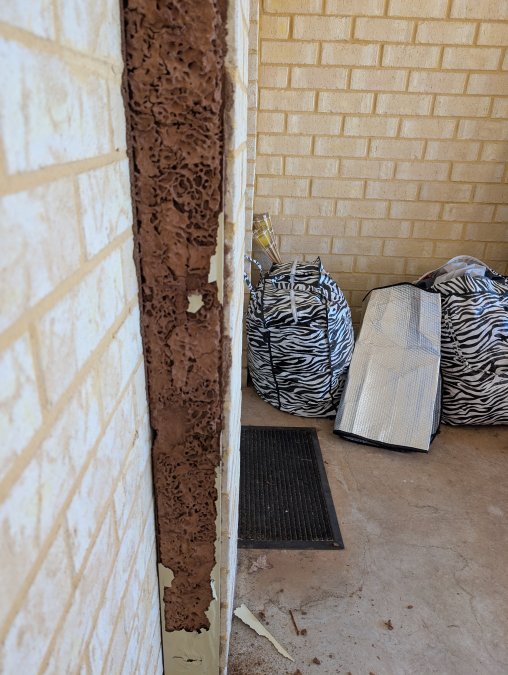
Mud tubes are pencil-width tunnels of soil, saliva and droppings that termites build to travel safely above ground. You will often find them on brickwork, foundations, piers and the base of walls. Mud leads run along surfaces, while mud patching covers cracks and joints. Any of these is a strong sign of termite activity.
Hollow-Sounding Timber, Blistered Paint and Pinholes
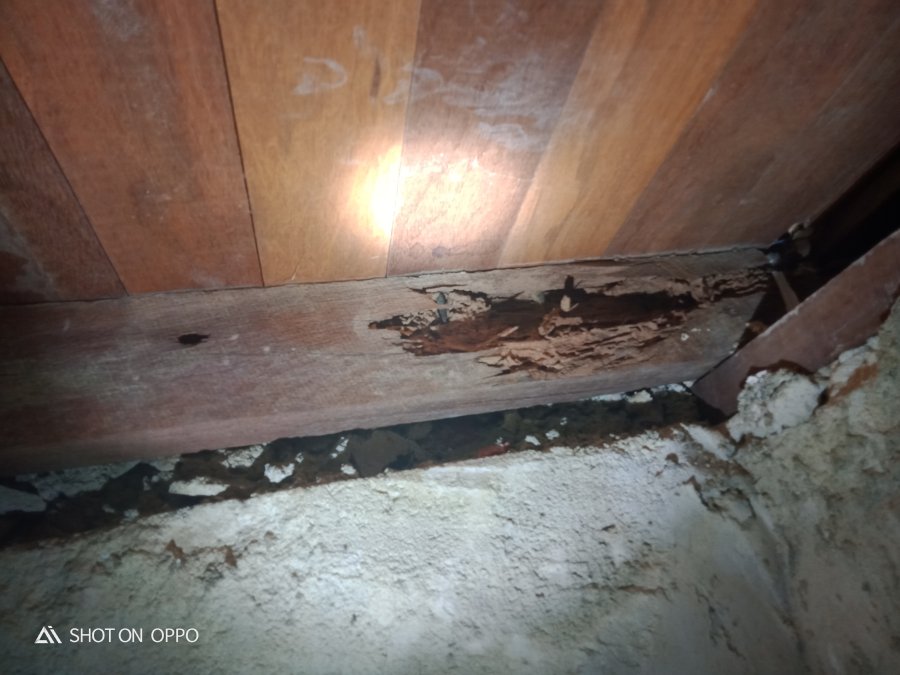
Tap timber with the handle of a screwdriver. A solid thud means sound timber. A hollow, papery sound suggests termites have eaten the core. Blistered, bubbling or rippled paint is another clue, because termites push moisture to the surface. Tiny pinholes in timber or plasterboard can also mark where they have broken through.
Sticking Doors, Loose Tiles and Sagging Floors
Termites add moisture and frass to timber, which makes it swell and warp. Doors and windows start to stick. Floors feel bouncy or sag. Tiles lift and crack as the structure beneath them shifts.
How to Check for Termites: A Safe Room-by-Room Sequence
Checking for termites is safe if you avoid disturbing active nests and never spray anything you find.
- Start outside. Check the base of walls, weep holes, fences and any wood-to-ground contact.
- Inspect the subfloor. Look for mud tubes on piers, bearers and joists. Tap timber gently.
- Check skirting boards and architraves in each room for bubbling paint and pinholes.
- Look around power points for frass or discolouration.
- Test doors and windows for sticking or warping.
- Check the ceiling cavity for damaged timbers and mud leads.
A common mistake is poking a nest or spraying it. That scatters the colony and makes treatment harder. If you want a full walkthrough, read our step-by-step home termite inspection guide.
Work through each room in the same order every time, with a torch and a screwdriver.
| Step | Where to check | What to look for |
|---|---|---|
| 1 | Outside | Base of walls, weep holes, fences, wood-to-ground contact |
| 2 | Subfloor | Mud tubes on piers, bearers and joists; tap timber gently |
| 3 | Skirting boards and architraves | Bubbling paint and pinholes |
| 4 | Power points | Frass or discolouration |
| 5 | Doors and windows | Sticking or warping |
| 6 | Ceiling cavity | Damaged timbers and mud leads |
Spotting the Difference: Active Termites vs Old Damage vs Lookalikes
Most guides stop at listing signs. The harder question is what a sign actually tells you. A mud tube, a hollow skirting board or a ripple in paint can mean three very different things: termites are active now, termites were active and have gone, or something else entirely caused the damage. Getting this wrong changes what you do next, so it is worth slowing down here.
What suggests current activity
Live termites are the clearest indicator, but you rarely see the colony itself. Instead, look for clues that the workings are still in use:
- Fresh mud. New mud is damp and dark, and it crumbles easily between your fingers. Old mud is dry, pale and brittle.
- Live insects. Worker termites are small, pale and soft-bodied. If you open a mud lead and see them moving, stop and do not disturb the area further.
- Damp frass. Frass is the droppings and chewed timber termites leave behind. Fresh frass is moist and clumps; old frass is dry and dusty.
A common pattern is that activity is concentrated where timber meets soil, where moisture collects, or where a previous treatment has been disturbed. That is why the same wall can show old damage at one end and fresh mud at the other.
What suggests old or historical damage
Old damage is timber that was eaten and then abandoned. The timber may be hollow, crumbly or darkened, but there are no live insects, no fresh mud and no damp frass.
Watch out: old damage is not proof the property is safe. A colony can abandon one feeding site and return to it, or move to a nearby wall, without leaving obvious new signs.
Lookalikes that mimic termite damage
Several common building problems produce symptoms that look like termite activity, and misreading them wastes time or, worse, leads to unnecessary treatment:
- Wood rot and moisture damage. Fungal decay softens and darkens timber in a way that resembles termite hollowing. Rot is usually associated with a persistent leak, poor drainage or rising damp, and the timber may feel spongy rather than papery.
- Borer and other wood-boring insects. Borer holes are typically small, round and accompanied by fine dust (frass) on the surface below. Termite damage is more often internal, with mud rather than dust as the giveaway.
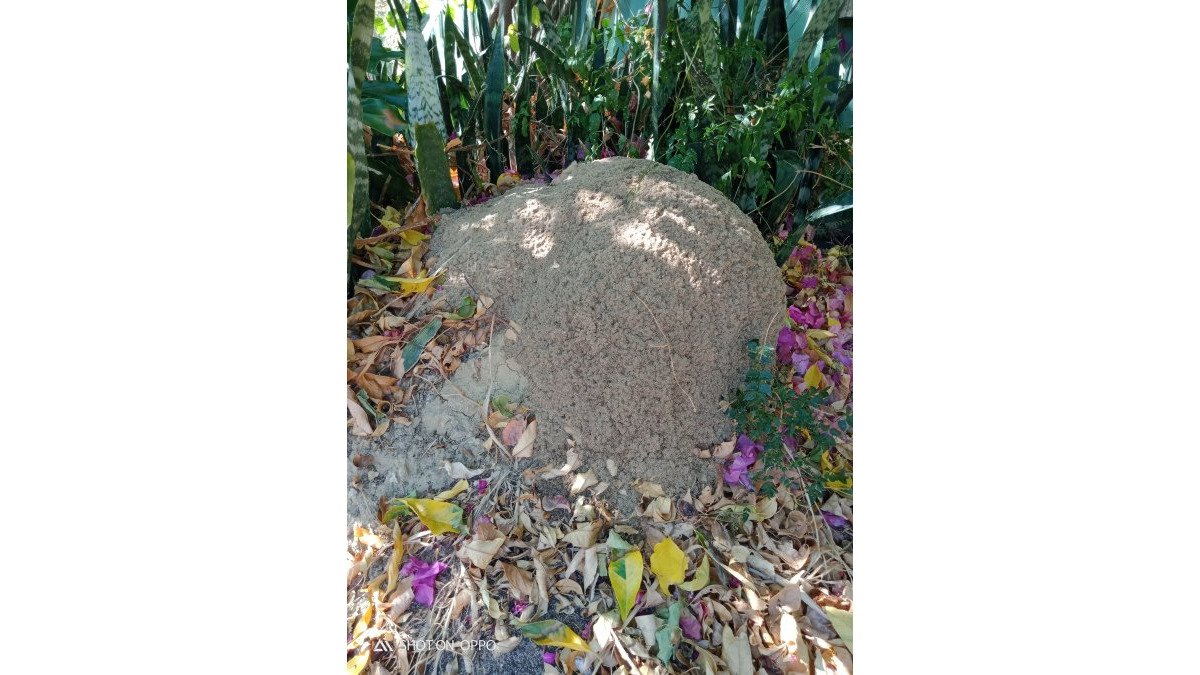
- Ant nests. Some ants excavate timber and soil, leaving debris that can be mistaken for termite workings. Ant debris is usually coarser and may include dead insects and soil pellets.
Why visual checks alone cannot confirm the answer
Tapping and looking are useful first steps, but they only assess what is visible and accessible. Termites can travel through wall cavities, behind render, under concrete slabs and inside concealed framing without leaving a surface sign.
That is the limit of any DIY check. A qualified inspector can assess accessible areas, use moisture meters and thermal imaging to identify concealed anomalies, and interpret the pattern of damage in context.
Perth Termite Risk Factors and Seasonal Timing
Generic advice about sandy soils and dry summers does not tell you much about your own home. The more useful question is which local conditions and construction styles make a property easier for termites to reach, and when activity is most likely to show itself.
Local conditions that raise the risk
The local climate and soil profile create a termite-friendly environment across much of the metropolitan area:
- Sandy soils. Sandy ground drains quickly but offers little barrier to termites, and it makes it easier for them to move between soil and timber.
- Long dry spells followed by wet periods. Termites need moisture, and the pattern of dry months followed by winter rain can push foraging activity toward damp spots around the home.
- Older housing stock. Many established suburbs contain homes built before modern termite-management requirements, often with timber framing close to ground level and less consistent barrier protection.
How termites commonly get into local homes
The access routes are usually mundane and easy to overlook:
- Wood-to-ground contact. Fences, pergolas, sleepers, garden edging and timber posts set into soil all provide a bridge.
- Weep holes and brick cavities. These are necessary for drainage but can also give termites a route into the wall cavity.
- Concealed slab edges and piers. Where a slab meets soil, or where piers sit in damp ground, termites can move up into the structure without a visible tube.
Seasonal timing and what to watch for
Flying termites, often called swarmers, typically emerge after warm, humid weather, most commonly in spring and early summer. Discarded wings near windows, doors and light fittings are a classic early sign, and they often appear before any visible damage.
Activity itself is not strictly seasonal, termites forage year-round in sheltered conditions, but the signs are easier to spot at certain times. After heavy rain, check for new mud tubes around foundations and weep holes.
Matching inspection frequency to risk
A single annual inspection suits many low-risk properties, but it is not the right answer for every home. Higher-risk properties, older homes, homes with extensive timber features, homes with poor drainage or a history of termite activity nearby, generally warrant more frequent checks.
Watch out: a barrier or previous treatment is not a guarantee. Barriers can be bridged, disturbed by landscaping or simply age out, so the inspection schedule should account for what is actually in place, not what was installed years ago.
Termite Inspection Cost: What a Professional Check Involves
A professional inspection covers far more than a quick walkaround, and a qualified inspector can assess the areas that are hard to reach by eye.
Cost depends on property size, access and whether thermal imaging is used. For a breakdown of what drives the price, see our guide to termite inspection costs. We offer free quotes and free advice, plus pensioner discounts.
What to Do If You Find Termites
Finding termites is not a reason to panic, but it is a reason to act carefully.
- Do not spray, disturb or remove the timber.
- Keep the area dry and mark the spot.
- Call a licensed professional the same day.
If you are weighing up treatment options, our guide to termite baiting systems explains how they work. For foundation-level clues, read about termite damage in home foundations, and for a broader checklist, see our termite warning signs guide.
Booking a Termite Inspection for Your Perth Home
Early signs are easy to miss, and concealed damage is expensive to fix. If anything in this guide looks familiar, book a professional inspection rather than waiting.
At Challenge Pest Control, we have protected Perth homes and businesses since 1987.
Get started with Challenge Pest Control and secure a clear, honest assessment of your home today.
Termites rarely announce themselves, so the sooner you act on a warning sign, the better.
Frequently Asked Questions
What are the first signs of termite damage in a home?
The earliest clues are often mud tubes on walls or foundations, paint that bubbles or ripples, and timber that sounds hollow when tapped. Sticking doors and windows, loose skirting boards and small pinholes in plasterboard are also common. In Perth, discarded wings near windows after a warm evening are another early warning. Because termites stay hidden, a single visible sign can mean a larger colony behind the wall, so book a professional inspection rather than waiting for more evidence.
How can you tell if timber damage is caused by termites?
Termite damage usually leaves timber hollowed from the inside with a thin outer shell intact, and you may see mud packed into the galleries. The surface often looks sound until it cracks or gives way. A tapping test helps: solid timber gives a firm thud, while damaged timber sounds hollow or papery. Fungal rot, by contrast, feels soft and damp and crumbles rather than leaving clean tunnels. If you are unsure, a licensed inspector can confirm whether the damage is active or old.
What should you do if you find signs of termites?
Do not spray the area or disturb the mud tubes, as this can scatter the colony and make treatment harder. Take photos, note the location, and keep the area untouched. Call a licensed termite specialist for an inspection, and keep the receipt for your records. Challenge Pest Control offers free quotes and advice and can arrange an inspection, with 24/7 availability on 0422926291 if you find something urgent. Early action limits structural damage and treatment cost.
How much does a termite inspection cost, and how often should it be done?
Termite inspection cost depends on property size, access and whether a thermal imaging or moisture meter check is included, so ask for a written quote before booking. Inspection frequency depends on the property, and higher-risk homes generally benefit from more frequent checks. A professional check covers the roof void, subfloor, fences and garden edges, which a DIY visual walk-around cannot reach. Challenge Pest Control provides free quotes for Perth homeowners.