 How-to
German Cockroach Pest Control: A Step-by-Step Treatment Plan
Last Updated: November 9, 2026
Quick Summary
German cockroach pest control works best as a sequenced plan: remove food, water and shelter, then place small gel bait dots in harbourage gaps, treat cracks and crevices, and set sticky traps to monitor results. Bait placement matters more than bait brand, and success is measured by falling trap catches rather than a single sighting.
- German cockroaches return because DIY attempts leave egg cases and harbourage untouched.
- Apply gel bait dots no larger than a grain of rice in hinge gaps and pipe penetrations.
- Rotate active ingredients between treatments to avoid encouraging resistance.
- Label sticky traps with location and date, then check them weekly.
- Call a professional when nymphs appear in multiple rooms or activity continues two weeks after correct baiting.
Table of Contents
- Why German Cockroaches Keep Coming Back
- Signs of German Cockroach Infestation to Check First
- Step 1: Remove Food, Water and Shelter
- Step 2: Apply Gel Bait and Bait Stations Correctly
- Step 3: Treat Cracks, Crevices and Harbourage Points
- Step 4: Set Sticky Traps and Monitor Results
- Professional Cockroach Treatment Cost and When to Call
- How to Prevent German Cockroaches From Returning
- Frequently Asked Questions
Why German Cockroaches Keep Coming Back
German cockroaches return because most DIY attempts kill the adults you can see while leaving egg cases and harbourage untouched. This guide from Challenge Pest Control sets out a sequenced plan that closes that gap.
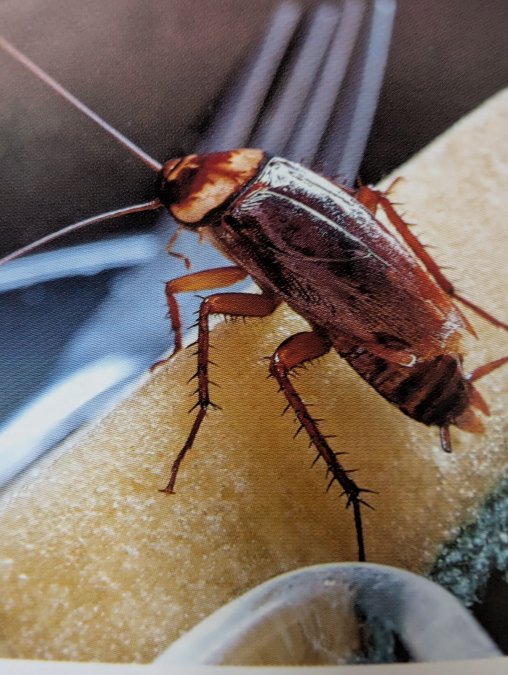
A German cockroach is a small, tan insect that hides in warm, damp cracks near food and water, and it breeds faster than almost any other household pest. A female can carry an egg case holding dozens of nymphs, and she drops it somewhere you will never spray. That is why a single treatment rarely holds. The population rebuilds from harbourage you did not reach.
Many quick-fix approaches focus on a spray can and a promise. In practice, sprays can scatter a colony into new hiding places and leave a residue that makes bait less attractive, so an infestation can look beaten for a fortnight and then rebound.
If your home is spotless and they still appear, the reason is rarely hygiene. Why cockroaches appear in clean houses explains the seven causes most people overlook.
Signs of German Cockroach Infestation to Check First
The clearest signs of German cockroach infestation are live nymphs in cupboard hinges, dark pepper-like droppings along skirting boards, and a musty oily smell in closed spaces. Seeing one in daylight usually means the harbourage is already crowded.
Check these before you buy anything:
- Small nymphs, pale and wingless, in the hinge gaps of kitchen cabinets
- Droppings that look like coarse black pepper in drawer runners
- Smear marks along warm pipes and behind the fridge
- Egg cases tucked into corners, often empty
- A greasy odour in the pantry that does not clear with cleaning
Where They Hide: Kitchen and Bathroom Hotspots
Kitchens and bathrooms hold nearly all the shelter a colony needs. Warmth, moisture and food sit within a metre of each other.
Look behind the fridge compressor, inside the dishwasher door panel, under the sink around pipe penetrations, in the gap between the bench and the wall, and inside the motor housing of small appliances. In the bathroom, check under the vanity, behind the toilet cistern and around floor waste traps. These are the classic harbourage points, and missing them is the most common reason treatment fails.
How to Run an Infestation Assessment
An infestation assessment is a structured torch-and-mirror check of every warm, dark gap in the room, scored so you can measure change later. Do it at night, an hour after lights out, when cockroaches are foraging.
Work one room at a time. Note each harbourage, the number of nymphs and adults seen, and whether droppings are fresh. Photograph what you find. That record becomes your baseline, and without it you cannot tell whether treatment is working.
Step 1: Remove Food, Water and Shelter
Deny the colony its three essentials before you treat anything. Sanitation is not cosmetic here; it decides whether bait gets eaten.
- Store dry goods in sealed containers and clear crumbs from drawers and runners
- Fix dripping taps and dry the sink and shower after use
- Seal gaps around pipes, kickboards and bench edges with a suitable filler
- Clear cardboard, paper bags and clutter from under sinks
- Take bins out nightly and rinse the recycling
Watch out: moving everything at once scatters the colony before bait is down. Clean in stages, treating each zone as you go.
Step 2: Apply Gel Bait and Bait Stations Correctly
Gel bait works when it is placed in the harbourage, not along open skirting. Apply small dots, no larger than a grain of rice, in the hinge gaps, corners and pipe penetrations where you found activity.
Bait placement matters more than bait brand. Put dots close to nesting sites, keep them away from cleaning sprays, and resist the urge to over-apply. Cockroaches feed on fresh bait; large smears dry out and get ignored. Place bait stations along foraging routes where gel cannot go, such as behind appliances.
Rotate active ingredients between treatments. Continued use of one insecticide encourages resistance, and rotating baits protects the ones that still work.
Bait placement follows a few simple rules that decide whether the colony takes it.
| What to do | How | Why it matters |
|---|---|---|
| Dot size | No larger than a grain of rice | Large smears dry out and get ignored |
| Placement | Hinge gaps, corners, pipe penetrations | Bait must sit in the harbourage |
| Keep away from | Cleaning sprays | Residue makes bait less attractive |
| Bait stations | Along foraging routes, behind appliances | Covers spots where gel cannot go |
| Rotation | Rotate active ingredients between treatments | Continued use of one insecticide encourages resistance |
Step 3: Treat Cracks, Crevices and Harbourage Points
Targeted treatment means getting product into the gaps where cockroaches actually live. Dusts and residual insecticide belong in wall voids, behind kickboards and around pipework, not on open surfaces.
Seal what you can. A bead of silicone around a pipe penetration removes a nesting site permanently. For gaps you cannot seal, a light application of insecticide dust gives long coverage in dry, undisturbed spaces.
Keep treated areas clear of children and pets until dry, store products locked away, and never apply insecticide near food, utensils or food-preparation surfaces. Read the label and follow it exactly.
Step 4: Set Sticky Traps and Monitor Results
Sticky traps tell you whether the plan is working. Place them flat against walls in the hotspots you identified, near harbourage rather than in open floor space.
Label each trap with its location and date. Check weekly. Falling catches mean the bait is being taken; a rising count in one spot means you missed a harbourage. Move traps after two weeks to test new areas.
Measure success by trend, not by a single sighting. Nymphs disappearing first is a good sign, because it means breeding has slowed.
Professional Cockroach Treatment Cost and When to Call
Professional cockroach treatment cost depends on the size of the property, the number of units affected and how many visits the infestation needs. For current prices, visit the Challenge Pest Control website or request a quote, and ask what follow-up is included before you commit.
A sequenced plan is what separates a lasting result from a fortnight of quiet. Ask any provider what their follow-up interval is and how they measure success, because a quote that includes monitoring is usually worth more than a cheaper one-off spray.
Consider calling a licensed professional when you see nymphs in multiple rooms, when activity continues two weeks after correct baiting, or when the infestation spans adjoining units. In a strata or apartment building, treating one unit in isolation often falls short, because shared structures may need coordinating across the building.
Weighing a DIY attempt against a technician visit? Pest control versus DIY home treatments compares both honestly. If you are unsure whether your situation warrants a call, the ten signs you need professional pest control gives you a clear checklist. And if you want to know whether quotes cost anything, whether pest control companies charge for quotes answers that directly.
At Challenge Pest Control, we have delivered pest control services since 1987, with free quotes, free advice and pensioner discounts. We are fully insured and offer 24/7 availability.
How to Prevent German Cockroaches From Returning
Prevention is a repeating routine, not a one-off clean. Keep the sanitation habits from Step 1, re-check hotspots monthly, and keep bait stations topped up in the warmer months when breeding accelerates.
Watch out: washing bait points away with routine cleaning is a common mistake. Wipe around them, not over them.
If pests have returned after a previous treatment, why pests return after professional treatment explains the usual causes and how to close them off.
A cockroach problem that keeps coming back usually needs a coordinated plan, not another can of spray. Challenge Pest Control brings guaranteed work, fully insured technicians, 24/7 availability and free quotes and advice, backed by our Public Health Licence 401. Get started with Challenge Pest Control and book a treatment that targets the harbourage, not just the insects you can see.
Frequently Asked Questions
Why are German cockroaches so hard to get rid of?
A single female German cockroach can produce several egg cases in her lifetime, and each case holds dozens of nymphs that mature in weeks. They hide in cracks as thin as a few millimetres, forage at night, and often live close to warmth and moisture behind appliances. Because they breed quickly and stay hidden, a partial treatment usually leaves survivors that rebuild the population. Breaking the cycle usually requires inspection, baiting, harbourage treatment and follow-up monitoring.
Do store-bought cockroach baits actually work?
Retail baits can knock down a light infestation, but they rarely solve a established german cockroach problem. Supermarket products often use the same active ingredient repeatedly, and cockroaches can develop resistance with repeated exposure. Placement matters just as much: bait needs to sit in cracks, hinges and harbourage points where cockroaches actually travel, not on open benchtops. If you have seen nymphs during the day or find droppings in multiple rooms, a professional assessment is the faster route.
Are German cockroaches a health risk in the home?
Yes. German cockroaches carry bacteria on their bodies as they move between drains, bins and food surfaces, and their shed skins and droppings can trigger asthma and allergies, particularly in children. They also leave a persistent musty odour in heavy infestations. Keeping food sealed, wiping benches and fixing leaks reduces the risk, but the most reliable protection is removing the infestation itself. Anyone with asthma or young children in the home should treat an infestation promptly rather than waiting.
How long does it take to get rid of a German cockroach infestation?
Results vary, but activity can drop within a few weeks once baiting, harbourage treatment and monitoring are combined. Heavy infestations or multi-unit buildings can take longer because cockroaches move between adjoining walls. Follow-up inspections at two-week intervals show whether the population is falling. If traps still catch adults after a month, the treatment plan needs adjusting, which is where a licensed technician can save time.