 ultimate-guide
Termite Inspection Cost: What You'll Actually Pay in 2026
Table of Contents
- What Drives Termite Inspection Cost
- What Is Included in a Termite Inspection
- Pre-Purchase Termite Inspection Cost vs Annual Checks
- How Often Should You Get a Termite Inspection
- DIY vs Professional Termite Inspections
- The Cost of Ignoring Termite Damage
- Conclusion
- Frequently Asked Questions
Last Updated: September 18, 2026
What Drives Termite Inspection Cost
The termite inspection cost you're quoted reflects how long the job takes, how hard the property is to inspect, and how much risk sits in the report. At Challenge Pest Control, we've inspected properties across the metropolitan area since 1987, and the pattern is consistent: price tracks access and complexity, not the suburb's reputation.
Three variables do most of the work:
- Property size and layout determine how many inspection points exist
- Access and construction decide how long each point takes to reach
- Site conditions such as soil type, drainage and landscaping add risk and time
Property Size and Layout
Floor area is the starting point, but layout matters more than the number on the title. A sprawling single-storey home with multiple wings takes longer to walk than a compact double-storey with the same floor area, because the inspector covers more perimeter and external wall line.
Access, Construction and Site Conditions
Access is the single biggest swing factor in any quote. If the inspector can walk upright through the sub-floor, the job moves quickly; at 400 millimetres of clearance with damp soil, every metre is slow, physical work.
What Is Included in a Termite Inspection
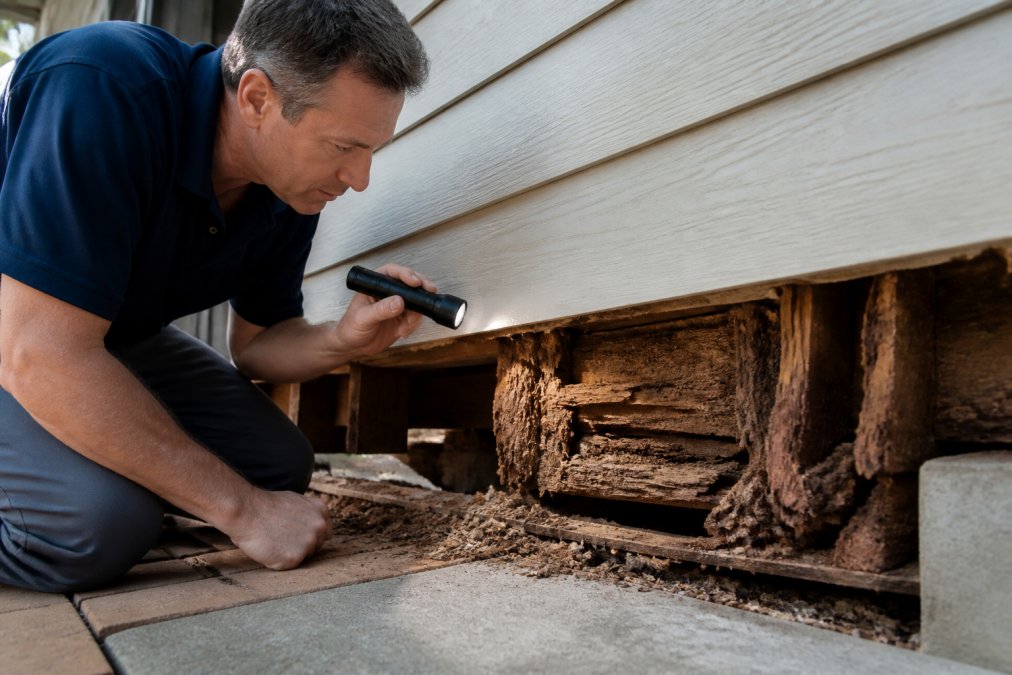
A standard inspection covers the accessible areas: the sub-floor where one exists, the roof void, interior rooms, the exterior perimeter and the immediate grounds. The inspector checks for live termites, evidence of past activity, damaged timber, and conditions that make infestation likely, such as excessive moisture or timber-to-soil contact.
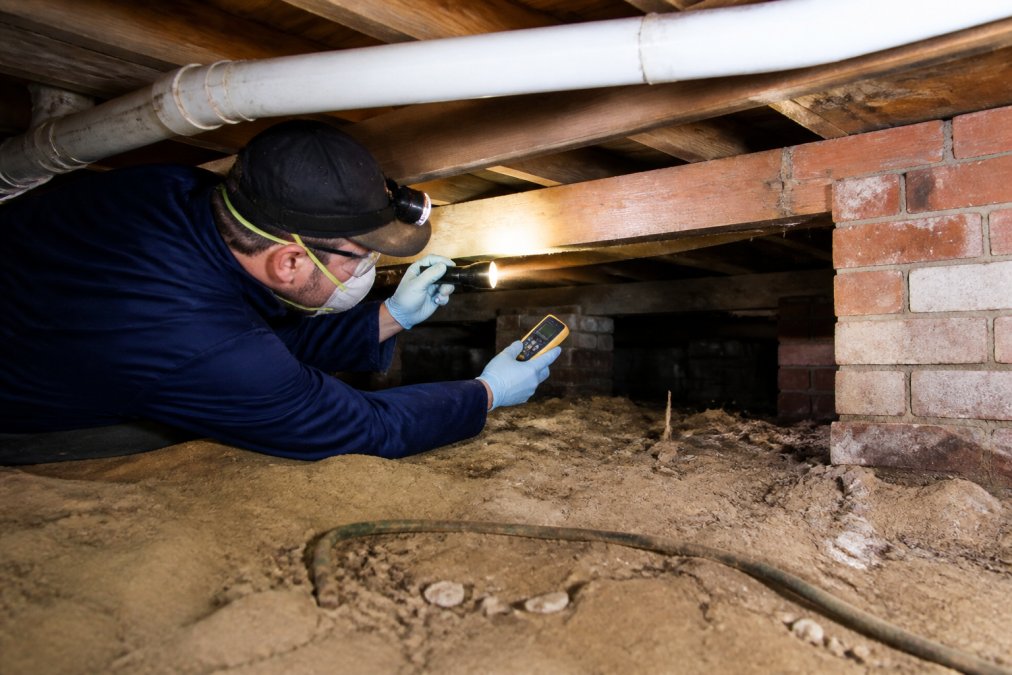
Here's what a thorough inspection typically includes:
- Sub-floor examination of bearers, joists, stumps and soil contact points
- Roof void check of framing, battens and any stored timber
- Interior scan of skirting, architraves, door frames and wet areas
- Exterior perimeter review of wall line, weep holes, fences and retaining walls
- Moisture detection at suspect points, since termites need moisture to establish
- A written report with findings, photographs and recommendations
The Standard Behind the Checklist
A professional inspection is not a walk-around with a torch. It follows a defined methodology: a systematic inspection of all accessible areas, with findings recorded against each area and any area that could not be inspected noted as a limitation. Most practitioners work to the Australian Standard for termite management inspections, which sets out what must be examined, how findings are recorded, and what a report must contain.
What 'Accessible' Actually Means
The word 'accessible' does most of the heavy lifting in any inspection report. It means what the inspector could physically reach and see on the day, without moving stored goods, dismantling fixtures or disturbing landscaping.
In practice, that means:
- A sub-floor with less than about 400 millimetres of clearance may be entered only partially, or not at all
- A roof void without a safe access hatch may be inspected from the hatch only
- Wardrobes packed to the ceiling, built-in cabinetry and tiled wet areas conceal wall framing
- Garden beds, paving and stored materials against the wall line hide the slab edge and weep holes
- Insulation batts laid over ceiling joists can mask activity in the roof void
How to Read the Report
A well-structured report separates three things that are easy to confuse: what was found, what it means, and what to do next.
- Findings should be specific, 'live termites in the sub-floor bearer adjacent to the rear laundry', not 'evidence of activity'.
- Assessment should state whether activity is current or historical, and how the inspector reached that conclusion.
- Recommendations should be actionable, a treatment type, a monitoring interval, or a further investigation such as a moisture survey or a second opinion.
- Limitations should list every area not fully inspected and why.
What Is Not Included
Just as important is what a standard inspection does not cover. It is a visual and moisture-based assessment, not a destructive investigation: no removing wall linings, lifting floorboards, cutting into cabinetry or excavating soil. It does not test a chemical barrier beyond what is visible, and it does not certify a property is free of termites, no inspection can, because termites can arrive the day after.
Pre-Purchase Termite Inspection Cost vs Annual Checks
A pre-purchase termite inspection cost sits higher than a routine annual check, and the gap is justified. The two services answer different questions. One asks "should I buy this property?" The other asks "is my home still protected?"
| Inspection Type | Primary Purpose | Typical Depth | Who Requests It |
|---|---|---|---|
| Pre-purchase | Inform a property transaction | Full, with limitations documented | Buyers, conveyancers |
| Annual maintenance | Monitor an ongoing treatment | Targeted at known risk zones | Homeowners, landlords |
| Pre-treatment | Confirm before a barrier is installed | Perimeter and soil contact | Property owners |
Why Pre-Purchase Inspections Cost More
Pre-purchase work carries more responsibility. The inspector is producing a document that may be relied on in a real estate transaction, which means more time on site, more thorough documentation, and often a faster turnaround.
Call And Book Today 0422926291 →
How Often Should You Get a Termite Inspection
The answer to how often should you get a termite inspection is at least once a year for most homes, and more often in high-risk situations. Annual maintenance is the baseline because termites can establish a colony and cause measurable structural damage well within twelve months.
Some properties need six-monthly checks:
- Homes in known termite-active areas
- Properties with previous termite activity or an older chemical barrier
- Homes with high moisture, poor drainage or timber close to soil
- Rental properties, where tenants rarely report early warning signs
DIY vs Professional Termite Inspections
DIY inspection doesn't work, and it's worth being blunt about why. You can learn to spot the obvious signs, and you should, because early detection is the whole game. But you cannot inspect your own sub-floor, roof void and wall cavities to a trained inspector's standard, and you cannot identify a species or confirm whether activity is current or long dead.
The Cost of Ignoring Termite Damage
Ignoring termites is the expensive option. The inspection fee is a fraction of what remediation costs once structural damage is established, and the gap widens the longer you wait.
Insurance: What Your Policy Actually Covers
This is the gap most cost guides skip. Many standard home building policies treat termite damage as an excluded event on the basis that it is preventable through maintenance. In plain terms, the policy may contribute to treating an active infestation, but it will not pay to repair the structural damage the termites caused.
A few practical points follow from that:
- Read the exclusions section of your product disclosure statement before you assume you are covered. The wording varies between insurers and between policy tiers.
- Some policies require evidence of an ongoing inspection and maintenance regime as a condition of cover. A gap in your inspection history can be used to decline a claim.
- A professional inspection report is often the document an insurer asks for when assessing a claim. A DIY check or a verbal opinion carries little weight.
- If you are buying, check whether the vendor's existing report is recent enough and broad enough to satisfy your insurer's requirements.
Resale and Valuation
A history of termite activity follows a property. Buyers ask, building and pest inspectors find evidence, and your negotiating position weakens, even fully treated and repaired damage raises questions at sale if the paperwork is incomplete.
The Post-Inspection Action Plan
If your inspection comes back positive, the cost question changes shape. Most practitioners recommend this sequence:
- Confirm the finding. Ask the inspector to state whether activity is current or historical, and which species is involved. Treatment differs by species.
- Get a treatment quote in writing. It should specify the method, the treated zones, any warranty period, and what the warranty does and does not cover.
- Address the conditions. Termites need moisture and timber-to-soil contact. Fixing drainage, reducing garden build-up against the wall line and repairing leaks is part of the solution, not an optional extra.
- Arrange a follow-up inspection. Most treatment warranties require a monitoring visit on a set cycle. Diarise it.
- Keep the paperwork. Report, treatment quote, invoice and follow-up records together form the evidence trail that matters at claim time or sale time.
- Tell your insurer if you are making a claim, and check whether the policy requires notification within a set period.
Conclusion
The real question isn't what a termite inspection costs, it's what skipping one costs you later. Every property carries some termite risk, and the only way to manage it is to know what's happening in your sub-floor, roof void and wall cavities.
Frequently Asked Questions
How much does a termite inspection typically cost?
Termite inspection cost depends on property size, layout, access and the type of inspection. A single-storey home with clear sub-floor and roof void access sits at the lower end, while double-storey homes or properties with limited access take longer and cost more. Pre-purchase inspections also cost more than annual checks because they cover more ground in detail. Challenge Pest Control offers free quotes, so call 0422 926 291 for a price based on your property.
Does a standard building inspection include termites?
No. A pre-purchase building inspection covers the general condition of the structure, but it does not include a timber pest inspection. You need a separate termite inspection carried out by a certified inspector to check for subterranean termites, active infestation and damage. Some providers bundle both, but they are different services with different scopes. Always confirm what is included before you book.
Is it worth getting a termite inspection?
Yes. Termites cause structural damage that often goes unnoticed until it is extensive. A professional inspection with thermal imaging can pick up activity behind walls, in sub-floors and roof voids before visible signs appear. The cost of a single inspection is small compared to remediation, timber replacement or a lower property valuation. Annual maintenance checks are the cheapest way to protect your home equity.
What should I expect during a termite inspection?
A certified inspector will carry out a visual assessment of accessible areas, including the sub-floor, roof void, foundation and interior. They use a thermal imaging camera and moisture detection tools to find hidden activity. You receive an inspection report with findings, risk assessment and recommendations. If termites are found, the report outlines the next steps, such as baiting systems or a chemical barrier.