 How-to
Annual Termite Protection for Homes: 2026 Guide
Table of Contents
- Annual Termite Protection for Homes: What Every Homeowner Needs to Know
- Annual Termite Inspection: What Happens and Why It Matters
- Signs of Termite Activity and Damage to Watch For
- Termite Treatment Lifespan: How Long Does Protection Actually Last?
- Termite Barrier Maintenance: Keeping Your Protection Intact
- How Often to Treat a House for Termites: Timing Your Protection Plan
- Your Annual Home Maintenance Checklist for Termite Prevention
- Conclusion
- Frequently Asked Questions
Last Updated: October 13, 2026
Annual Termite Protection for Homes: What Every Homeowner Needs to Know
Annual termite protection for homes is the practice of combining a yearly professional inspection with an active management system to keep subterranean termites away from your property. At Challenge Pest Control, we have protected homes since 1987, and one lesson stands out: termites rarely announce themselves.
That is why protection is a habit, not a one-off treatment.
A full year of cover rests on three things:
- A professional inspection every 12 months
- A working barrier or baiting system
- Simple maintenance you can do yourself
Below, we break down exactly what happens at each stage, how long treatments last, and how to time your next service.
Annual Termite Inspection: What Happens and Why It Matters
An annual termite inspection is a visual check of your whole property by a licensed pest controller.
Your technician will check:
- The subfloor, foundations and slab edges
- Timber framing, decks, pergolas and fences
- Gardens, retaining walls and trees near the house
- Roof voids where accessible
Early detection is the whole point. Termites can enter through gaps as narrow as a few millimetres, so a trained eye catches activity long before you would.
What a Professional Inspection Covers
A proper inspection follows a set method. The technician checks every likely entry point, taps timber for hollow sounds, and uses a moisture meter on suspect areas.
Detection technology helps too. Thermal cameras and microwave tools can spot termite activity behind walls without cutting anything open.
How to Read Your Inspection Report
Your inspection report is a snapshot of your property's risk at that moment. It is not a guarantee that termites are absent.
Look for these sections:
- Findings: what the technician saw, and where
- Risk factors: moisture, timber contact with soil, poor drainage
- Recommendations: monitor, treat, or install a barrier
- Limitations: areas that could not be accessed
If a report says "no active termites found", that means none were visible on the day. It does not mean your home is safe forever.
Signs of Termite Activity and Damage to Watch For
Termite damage is often preventable, but only if you spot the warning signs early. A common mistake is waiting for visible destruction before calling anyone.
Watch for:
- Mud tubes on walls, piers or foundations
- Hollow-sounding timber when tapped
- Bubbling or cracked paint on walls
- Doors and windows that suddenly stick
Subterranean termites build mud tunnels to travel between soil and food. If you see one, do not break it open. Call a licensed specialist and leave it for inspection.
Termite Treatment Lifespan: How Long Does Protection Actually Last?
Termite treatment lifespan depends on the method, the product and your soil conditions. Most chemical barriers are registered to protect a home for several years, while baiting systems work continuously as long as they are monitored and refilled.
Here is how the main options compare:
| Method | Typical Lifespan | Maintenance Needed | Best For |
|---|---|---|---|
| Chemical soil barrier | Several years | Annual inspection | New builds, full perimeter access |
| Baiting system | Ongoing while serviced | Regular monitoring | Established gardens, limited access |
| Physical barrier | Long-term | Annual inspection | New construction |
| Timber treatment | Varies by product | Periodic reapplication | Renovations, exposed timber |
The lifespan clock starts at installation, not at your last inspection. This is the distinction most homeowners miss: inspection frequency and treatment duration are two different things.
Termite Barrier Maintenance: Keeping Your Protection Intact
Termite barrier maintenance is what keeps a treatment working between services. A barrier is only as good as the soil and structure around it, and most barrier failures are not product failures, they are breaches created by landscaping, plumbing or renovation work that nobody recorded.
How Barriers Actually Fail
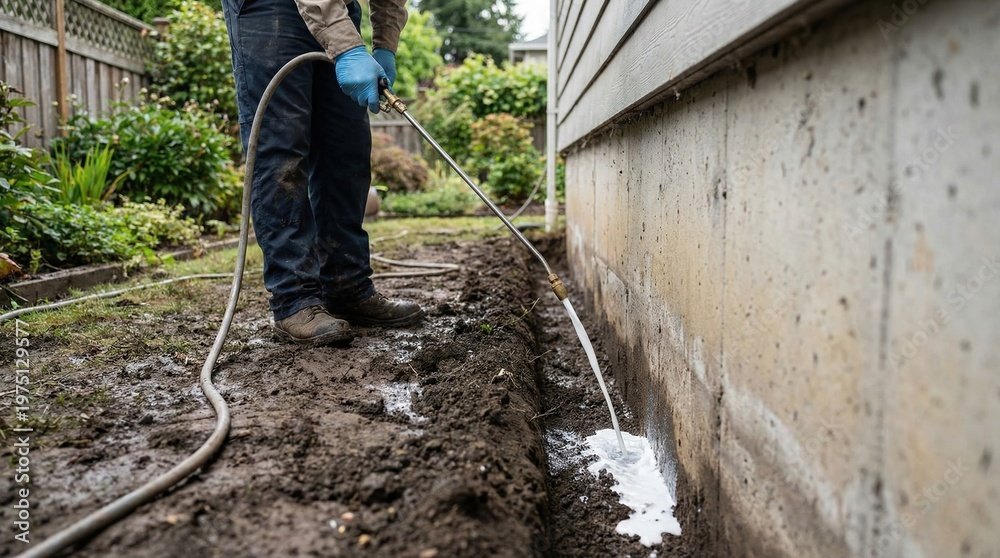
A chemical soil barrier works as a continuous treated zone around and under the building. It fails when that continuity is broken. The common breaches are:
- Soil disturbance: new garden beds, retaining walls, paving or concreting over a treated zone
- Plumbing and drainage work: trenches cut through the treated zone for pipes, stormwater or irrigation
- Moisture: pooling water, leaking taps or blocked drains that degrade the treatment over time
- Bridging: soil, mulch, timber sleepers or trellis built up over the damp-proof course, giving termites a path around the barrier
Baiting systems fail differently. They stop working when stations are not monitored, when bait is not replenished, or when the station is disturbed by gardening, mowing or pets.
What to Protect, by Construction Type
| Construction | Main Risk | What to Check |
|---|---|---|
| Full slab | Cracks, service penetrations, slab edge exposure | Slab edge, expansion joints, pipe entries, weep holes |
| Raised floor / subfloor | Soil-to-timber contact, poor ventilation, moisture | Piers, stumps, bearers, subfloor ventilation, soil level |
| Brick veneer | Weep holes blocked, cavity bridging | Weep holes, cavity, base of walls, garden beds |
| Renovation or extension | Barrier cut or bypassed during works | Where new work meets the old barrier, new wet areas |
| Deck or pergola attached to house | Timber-to-soil contact, concealed fixings | Posts, bearers, joists, attachment point to the house |
If you have had plumbing, drainage, landscaping or renovation work done since your last service, tell your pest controller. That work is the single most common reason a barrier needs re-inspection or topping up.
Protect the Barrier Between Services
- Keep soil levels below the damp-proof course
- Clear mulch and soil away from weep holes
- Fix leaking taps and blocked drains fast
- Avoid garden beds built against the house
When Maintenance Turns Into a Re-Treatment
Maintenance keeps a barrier intact. It does not extend its registered lifespan. If a barrier has been breached, if activity is found, or if the treatment has aged past its registered period, the fix is a new or topped-up treatment, not more monitoring. Your pest controller should tell you which of the two you are looking at, and why.
How Often to Treat a House for Termites: Timing Your Protection Plan
How often to treat a house for termites depends on your barrier type, your home's risk factors and your warranty terms. For most homes, a professional inspection every 12 months is the baseline, with re-treatment only when the barrier ages out or activity is found.
Risk factors that shorten the clock:
- High moisture or poor drainage
- Dense gardens and timber against the walls
- Previous termite activity on the property
- Older homes with less barrier protection
- Recent landscaping, plumbing or renovation work that disturbed the treated zone
Warranties usually require annual inspections to stay valid. Miss one, and a claim may be refused. Always check the terms before you skip a year.
Choosing the Right Protection Approach for Your Home
There is no single best system. The right choice depends on your construction type, access, soil, risk level and how much ongoing maintenance you are prepared to do. Use this as a starting point, then confirm with a licensed pest controller who has inspected your property.
| Approach | What It Does | Ongoing Effort | Suits |
|---|---|---|---|
| Inspection only | Detects activity early; no active barrier | Annual inspection | Low-risk homes, homes with an existing barrier still in date |
| Chemical soil barrier | Creates a continuous treated zone in the soil | Annual inspection; re-treatment when it ages out | New builds, full perimeter access, slab and raised floor |
| Baiting system | Intercepts and reduces colony activity around the home | Regular monitoring and bait refills | Established gardens, limited access, high-risk sites |
| Physical barrier | Blocks termites at construction stage | Annual inspection | New construction and major renovations |
| Timber treatment | Protects exposed or in-situ timber | Periodic reapplication | Renovations, exposed timber, remedial work |
| Combined system | Barrier plus monitoring for higher-risk sites | Annual inspection plus monitoring | High-risk locations, previous activity, complex homes |
Matching the Plan to the Property
- Full slab, new build: a chemical soil barrier installed at construction, plus annual inspections, is the standard baseline.
- Raised floor with subfloor access: barrier plus more frequent subfloor checks, because there are more entry points and moisture is harder to control.
- Home with established gardens: baiting often suits better than a soil barrier, because digging and planting will breach a treated zone.
- Renovation or extension: the barrier must be re-established where new work meets the old, or the protection has a gap.
- Previous termite activity: a combined system with closer monitoring is usually warranted, regardless of construction.
Inspection Frequency vs Treatment Lifespan
These are two different clocks, and confusing them is the most common mistake homeowners make.
- Inspection frequency is how often someone looks. Annual is the standard baseline, and it is usually a warranty condition.
- Treatment lifespan is how long the installed protection is registered to last. A chemical barrier may be registered for several years; baiting works continuously while serviced.
The lifespan clock starts at installation, not at your last inspection. So you can, and often should, keep inspecting annually even when the treatment itself is designed to last several years. Skipping inspections because "the barrier is still good" is exactly how warranties get voided and damage gets missed.
Your Annual Home Maintenance Checklist for Termite Prevention
Homeowner maintenance is the cheapest termite protection you will ever buy. Run this checklist every season and you will catch most problems early.
- Check for mud tubes on foundations and piers
- Clear leaves and mulch from weep holes
- Fix dripping taps and leaking gutters
- Keep at least 30cm of clear space between soil and timber
- Store firewood off the ground and away from the house
Different construction types need different attention. Timber-framed homes on raised floors give termites more entry points than a full slab build, so check the subfloor more often.
Conclusion
Termites work quietly, and by the time damage is obvious, the repair bill is already large. The good news is that a simple routine of annual inspections, barrier upkeep and seasonal checks stops most problems before they start.
At Challenge Pest Control, we have handled termite inspections and management for homes since 1987. Our team is fully insured, available 24/7, and every job is guaranteed.
Call us on 0422 926 291 and book your annual termite protection today.
Frequently Asked Questions
Should I get termite protection yearly?
Yes, annual termite inspections are recommended for most homes. Termites can cause structural damage within months of entering a building, and early detection is the difference between a targeted treatment and a major repair bill. A yearly inspection by a licensed pest controller checks your termite barrier, looks for activity, and catches moisture or entry points before they become a problem. Between inspections, keep the perimeter clear and fix leaks promptly.
How often do I need to treat my house for termites?
Treatment frequency depends on the method used. Chemical barriers typically need reapplication every five to eight years, while baiting systems require ongoing monitoring and replenishment. Some homeowners retreat when the barrier warranty expires; others rely on annual inspections to decide. Your licensed pest controller will recommend a schedule based on your home's construction, soil type, and previous termite history. Annual inspections remain necessary regardless of treatment lifespan.
Is annual termite protection worth the cost?
Termite damage is rarely covered by home insurance, and repair costs can run into tens of thousands of dollars. Annual inspections and a maintained termite management system cost a fraction of that. For most homeowners, the expense of yearly protection is far lower than the risk of structural repairs, especially in high-risk areas. A free quote from a licensed provider will show you what a tailored plan costs for your property.
Does a termite barrier need regular maintenance?
Yes. Chemical barriers degrade over time, and physical barriers can be disturbed by landscaping, plumbing work, or renovations. Termite barrier maintenance involves checking the barrier for gaps, reapplying chemicals when needed, and ensuring the treated zone stays intact. Your annual inspection should include a barrier check. If you have had work done near the slab or foundation, tell your pest controller so they can verify the barrier is still continuous.