 How-to
How to Keep Pest Control Records Ready for Health Inspections
Last Updated: November 2, 2026
Quick Summary
To meet pest control documentation requirements for health inspections, keep written inspection reports, treatment records naming the pesticide and application area, monitoring evidence such as bait station maps, and corrective action notes. Run a monthly checklist so pest control records are complete, signed, dated and retrievable before an inspector arrives.
- Inspectors check four things: written inspection reports, treatment records, monitoring evidence and corrective actions.
- A service report should name the pesticide's active ingredient, rate and total quantity applied.
- Keep service reports, pesticide records, inspection reports and corrective notes for seven years.
- Keep pest sighting logs for three years to show monitoring history across staff turnover.
- Store a scanned copy of every signed report, indexed by date and site, with an off-site backup.
Table of Contents
- What Health Inspectors Look For in Pest Control Documentation
- Your Pest Control Inspection Checklist for Compliance
- What a Compliant Pest Control Service Report Template Should Contain
- Building a Pest Sighting Log for Restaurants and Food Premises
- Pest Control Records Retention: How Long to Keep Everything
- In-House vs Contracted Pest Management: Documenting Both
- Book a Pest Inspection That Comes With Proper Paperwork
- Frequently Asked Questions
What Health Inspectors Look For in Pest Control Documentation
Pest control documentation requirements for health inspections come down to one question: can you prove what you did, when you did it, and what happened next? An environmental health officer wants a written trail, not a verbal promise.
Inspectors check four things:
- Written inspection reports with dates and findings
- Treatment records naming the pesticide used and where it was applied
- Monitoring evidence, such as bait station maps and catch data
- Corrective actions showing what you fixed after pest activity was found
Under the Food Standards Code, food businesses must take all practicable steps to prevent pests from entering and breeding on the premises. The Food Standards Australia New Zealand guidance on pest control sets out that expectation.
If any of those four items are missing, you have a gap. Gaps read as audit failure risk.
Your Pest Control Inspection Checklist for Compliance
A pest control inspection checklist is a simple document that lets you confirm your records are complete before an inspector arrives. Run this list once a month, not once a year.
Use it as a working checklist:
- Current pest management plan on file, signed and dated
- Service schedule showing inspection frequency
- Written report from every visit, including "no activity found" visits
- Pest sighting log with dates, locations and actions taken
- Treatment records listing pesticide name, rate and application area
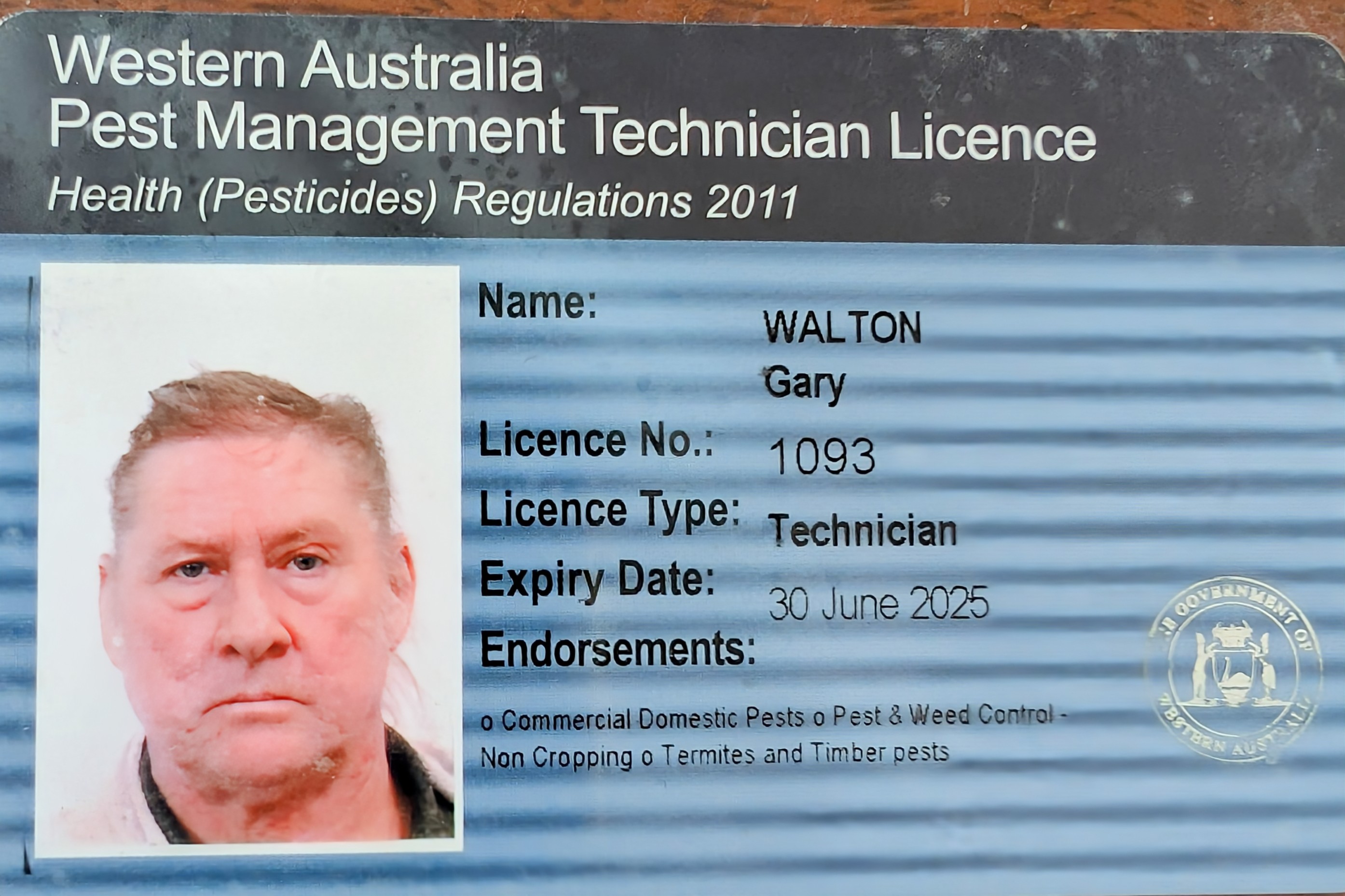
- Copy of the pest controller's licence and public health registration
- Safe handling and storage records for any on-site chemicals
- Follow-up notes confirming corrective action was completed
- Written quotation and service agreement on file
A common mistake is only keeping records for visits where pests were found. Quiet months still need a record.
For the wider requirements behind these documents, see our guide to commercial pest management requirements.
What a Compliant Pest Control Service Report Template Should Contain
A pest control service report template is the standard form your provider completes at every visit.
A compliant service report should contain these fields, each with enough detail to be useful months later:
- Date, time and technician name, the full name of the person on site, not just a company name. Inspectors want to know who attended and when.
- Licence or registration number, the technician's pest management licence number and, where the work touches food premises, any public health registration required by your state or territory.
- Areas inspected, room by room, a list of every area checked (dry store, cool room, loading dock, bin bay, ceiling void), not a single line saying 'premises inspected'.
- Pest evidence found, or a clear nil finding, species, approximate numbers, and where the evidence was seen (droppings, gnaw marks, live insects, webbing, nesting material). A nil finding must be stated explicitly, not left blank.
- Pesticide used, including active ingredient and rate, the product name, the active ingredient, the concentration or application rate, and the total quantity applied. This is the field inspectors scrutinise most.
- Application method and location, gel baiting, residual spray, dusting, trapping, or physical exclusion, with the specific areas treated.
- Safe handling and storage notes, any warning statements, re-entry periods, or storage instructions that apply to the products used on site.
- Recommendations and corrective actions, what the provider recommends you fix (proofing gaps, sanitation issues, stock rotation) and by when.
- Signature and counter-signature, the technician signs, and a responsible person on your site signs to confirm the visit occurred and the report was received.
The pesticide field matters most. Inspectors want to see that any chemical applied was registered for that use and handled by a qualified person.
A report is only compliant if it is legible, dated, and retrievable. Keep the signed original, scan it, and file it against the visit date so you can produce it during an inspection without hunting through email.
Building a Pest Sighting Log for Restaurants and Food Premises
A pest sighting log for restaurants is a dated record any staff member can add to when they see a pest, droppings, gnaw marks or nesting material. It turns scattered complaints into usable evidence.
Keep it simple. Every entry needs five things:
- Date and time
- Exact location, such as "dry store, back left shelf"
- What was seen
- Who reported it
- Action taken and date closed
Food handlers are your best sensors. Train them to log sightings instead of mentioning them in passing. A pattern across three entries in the same corner tells your pest controller exactly where to focus monitoring and prevention work.
Pair the log with your sanitation schedule. Most pest activity in food premises traces back to food, water or harbourage. Fix those and the log entries drop.
For the practical steps that sit alongside this log, read our guide to pest control for restaurants.
Pest Control Records Retention: How Long to Keep Everything
Pest control records retention is how long you must keep inspection reports, treatment records and service receipts, and where and how you keep them so they can be produced on demand. There is no single national retention period for pest records alone, so check every period that could apply to your business.
Retention periods come from several layers, and they do not always agree:
- National food standards, the Food Standards Code requires food businesses to take practicable steps to prevent pests, and to be able to demonstrate that they have done so. It does not set a fixed number of years for pest records, which is why the longer of the applicable periods should govern.
- State and territory food and public health legislation, each jurisdiction sets its own record-keeping and inspection expectations for food premises, and some impose specific retention periods for food safety records. Check the current requirements for your state or territory rather than assuming a national figure.
- Local council requirements, councils register and inspect food premises and may specify what records must be available at inspection and for how long after.
- General business and tax record rules, the Australian Taxation Office record keeping requirements generally require business records to be kept for five years, which is a floor, not a ceiling, for pest records.
- Industry and certification schemes, if you hold a food safety certification or supply major customers, your scheme or contract may require longer retention and faster production.
Our practical rule, designed to satisfy the longest of those layers:
| Record type | Keep for | Why |
|---|---|---|
| Service reports and receipts | 7 years | Covers the longest common business and audit expectation |
| Pesticide application records | 7 years | Supports safe handling, traceability and due diligence |
| Pest sighting logs | 3 years | Shows monitoring history across staff turnover |
| Inspection reports | 7 years | Proves compliance over time |
| Corrective action notes | 7 years | Shows follow-up was completed |
Storage and access matter as much as duration. An inspector may ask for a specific visit report during an inspection, and a box of unsorted paper in a storeroom will not meet that expectation. Store records so they can be produced the same day:
- Keep a digital copy of every signed report, scanned and named by date and site.
- Maintain a simple index or logbook so anyone on site can find a report quickly.
- Keep at least one backup off site or in cloud storage.
- Make sure a named person is responsible for records, and that a deputy knows the system.
- Retain records through changes of ownership, provider or premises layout.
If you use a contracted provider, confirm in the service agreement what records they supply, in what format, and how quickly they will provide copies on request. If you monitor in house, your own templates and filing system carry the same weight.
For the wider requirements behind these documents, see our guide to commercial pest management requirements.
In-House vs Contracted Pest Management: Documenting Both
Documentation standards do not change based on who does the work. What changes is who signs.
In-house: your own staff inspect and record. You need trained people, your own templates, and a clear rule on who signs off. The risk is inconsistent records when staff turn over.
Contracted: a professional pest controller supplies the written reports and treatment records. Your job is to keep them, file them, and act on the recommendations.
Whichever route you take, keep the same core set: inspection reports, treatment records, service receipts, monitoring data and corrective actions.
For help choosing an agreement that supplies proper records, see our guide to commercial pest control agreements, and for a broader comparison of methods, read the best pest control methods for businesses.
Book a Pest Inspection That Comes With Proper Paperwork
The paperwork problem has a simple fix: choose a provider whose service already includes the records you need. At Challenge Pest Control, we have served commercial, industrial and domestic clients since 1987, and Our work is documented so you have a record to hand to an inspector.
What you get:
- Fully insured, guaranteed work
- Free quotes and free advice before you commit
We operate 24 hours a day, seven days a week, so an urgent pest problem never waits. We are fully insured and offer pensioner discounts.
If you are weighing up whether quotes cost anything, read do pest control companies charge for quotes before you call.
Frequently Asked Questions
What pest control records should a food business keep?
A food business should keep written inspection reports, service receipts, treatment records, a pest sighting log with corrective actions noted, and any monitoring or bait station maps. These pest control records should be dated, signed and stored where staff can access them during a health inspection. Keep them alongside your food safety program so an environmental health officer can review the full history of pest activity and how it was handled.
How long should pest control records be kept?
Retention periods vary by jurisdiction and by the type of record. Check local council requirements and your food safety program for the period that applies to your premises. Store records so they remain legible and retrievable, whether on paper or in a digital system with a clear audit trail.
Can a business pass a health inspection without a pest control contract?
It is possible, but you need to show a documented pest management program either way. In-house pest control requires the same standard of written inspection reports, monitoring records and corrective actions as a contracted service. Many businesses use a professional pest controller because the service report and treatment records are produced for them, which makes demonstrating due diligence at inspection simpler.
What should a pest control service report include?
A compliant service report should name the site and date, identify the technician and their qualification, describe the inspection findings and any pest evidence, list treatments and pesticides applied with safe handling details, record monitoring device locations, and note recommended corrective actions and follow-up dates. Ask your provider for a written report after every visit so your pest control records stay complete.
Inspections reward the prepared. If your records are patchy, or you want a provider who supplies proper paperwork as standard, call Challenge Pest Control on 0422926291 and book an inspection. You will get a written report, clear treatment records, and a documented plan to keep your premises compliant.