 How-to
How to Identify Dangerous Spider Bites in Perth
Last Updated: October 29, 2026
Quick Summary
Identifying dangerous spider bites in Perth comes down to three things: the spider if you saw it, the pattern of the bite site, and the speed and direction of symptoms. A dangerous redback or funnel-web bite typically causes fast, sharp pain, a small central mark and systemic symptoms like sweating, nausea or muscle cramping within 1-2 hours. Call Triple Zero (000) for any suspected funnel-web bite.
- Redbacks are black with a red stripe and build messy webs in dry, sheltered spots like sheds and outdoor furniture.
- Funnel-web bites need pressure immobilisation with a broad elastic bandage plus an immediate Triple Zero (000) call.
- For a redback bite, keep the person calm, apply a cold pack for 15-20 minutes and watch for systemic symptoms.
- A bite that grows, becomes hot or spreads over 24-48 hours is more likely infection than venom.
- Shake out shoes, gloves and outdoor gear before use, and clear webs from sheds and furniture weekly.
Table of Contents
- Dangerous Spiders You'll Find Around Perth Homes
- How to Tell a Dangerous Spider Bite from a Harmless One
- Redback Spider Bite Symptoms to Watch For
- First Aid for Spider Bites: Step-by-Step
- When to Seek Emergency Medical Attention
- Preventing Spiders from Nesting in Your Home
- When to Call Professional Spider Pest Control
- Booking a Spider Inspection for Your Property
- Frequently Asked Questions
Dangerous Spiders You'll Find Around Perth Homes
Identifying dangerous spider bites in Perth starts with knowing what bit you. The redback and the funnel-web are two species to know about. For a month-by-month breakdown of when each species is most active, see our seasonal spider activity guide for Perth residents.
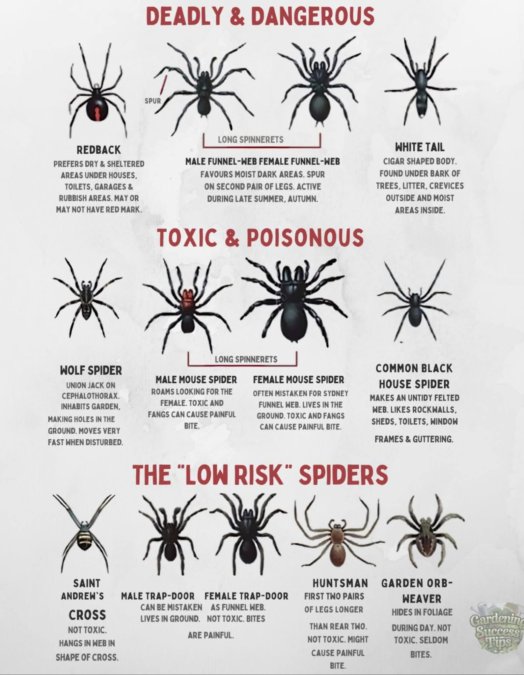
Perth sits in a hotspot for venomous spiders. Most bites happen around the home, in sheds, gardens and outdoor furniture.
Redback Spiders
Females are black with a bold red stripe on the abdomen. They build messy, irregular webs in dry, sheltered spots: under outdoor chairs, in letterboxes, behind pot plants.
Redbacks are not aggressive. Bites usually happen when someone reaches into a web or sits on a spider. Their venom is neurotoxic, and it can make you very sick.
Funnel-Web Spiders in Western Australia
Funnel-web spiders are large, dark and shiny, with a glossy cephalothorax and heavy fangs. In Western Australia, the main concern is the northern tree-dwelling funnel-web, found in the south-west near Albany and Denmark.
These spiders are dangerous. A bite is a medical emergency. They shelter in cool, damp, shaded spots, often under logs or rocks.
Other Spiders That Cause Concern
Most other local spiders are painful but not dangerous. Mouse spiders and trapdoor spiders can give a nasty bite. White-tailed spiders cause localised pain and inflammation, not the tissue damage many people fear.
How to Tell a Dangerous Spider Bite from a Harmless One
Most spider bites in Australia are harmless, and most people who think they have been bitten by something dangerous are wrong. That is not reassurance, it is a reason to look at the evidence properly rather than panic or dismiss it. A dangerous bite is judged on three things: the spider (if you saw it), the pattern of the bite site, and the speed and direction of symptoms.
What a dangerous bite actually looks like
A dangerous spider bite, redback or funnel-web, typically produces:
- A small central mark. One or two tiny puncture points, sometimes visible, often not. Fang marks are frequently obscured by swelling within minutes.
- Pain that arrives fast. Redback bites sting sharply within minutes and the pain intensifies over the first hour. Funnel-web bites are immediately painful and the pain escalates.
- Redness and swelling that stay local at first. The skin around the bite may redden and swell, but it does not usually spread like a rash.
A harmless bite, from a garden orb-weaver, huntsman, daddy long-legs or most house spiders, usually produces a small red lump, mild local itch or sting, and nothing else. It may be annoying for a day or two and then settles.
The look-alikes that catch people out
Many suspected spider bites are not bites at all. The most common confusions are:
- Cellulitis. A spreading, hot, tender red patch with no central puncture. It worsens over 24-48 hours and needs antibiotics, not antivenom.
- Hives or an allergic reaction. Raised, itchy welts that move around the body, often in clusters. No central bite mark.
- Insect bites. Mosquito, flea and bedbug bites often appear in lines or clusters and itch intensely without systemic symptoms.
A useful rule: bites have a central mark and a story (you were in the garden, clearing the shed, putting on shoes). Skin conditions spread, recur, or follow a pattern unrelated to where you have been.
The timeline test
Time is the most reliable discriminator you have at home:
- Within 10 minutes: sharp local pain suggests a significant bite. No pain at all makes a dangerous bite unlikely.
- Within 1 hour: sweating, nausea, cramping or feeling generally unwell after a suspected bite is a red flag. Call Triple Zero (000) for a suspected funnel-web bite; for a redback bite with systemic symptoms, seek urgent medical review.
- Over 24-48 hours: a bite that grows, becomes hot, or develops spreading redness is more likely infection than venom. Get it assessed.
When the spider is the best evidence
If you saw and can safely describe the spider, that is more useful than any bite photo. Note the colour, body shape, web type and where it was sitting.
If you are unsure whether spiders are even the problem, a professional inspection can help identify what is living on the property.
The article's timeline test is the most reliable at-home way to judge a suspected bite.
| Timeframe | What to watch for | What it suggests |
|---|---|---|
| Within 10 minutes | Sharp local pain | Suggests a significant bite |
| Within 10 minutes | No pain at all | Dangerous bite unlikely |
| Within 1 hour | Sweating, nausea, cramping, feeling unwell | Red flag; call Triple Zero (000) for funnel-web |
| Over 24-48 hours | Bite grows, becomes hot, spreading redness | More likely infection than venom |
Redback Spider Bite Symptoms to Watch For
Redback spider bite symptoms build over the first hour. The classic sign is sharp localised pain at the bite site, followed by sweating and muscle cramping. The pain can spread to the chest, abdomen or limbs.
Localised Pain and Muscle Cramping
Pain is the first clue. It often starts as a sharp sting, then settles into a dull ache that gets worse. Muscle cramping and rigidity can follow, especially in the back, legs or abdomen.
The bite site itself may show little more than a small red mark. Don't judge severity by how the skin looks.
Systemic Symptoms: Nausea, Sweating and Irregular Pulse
Systemic symptoms mean the venom is having a wider effect. Watch for:
- Nausea and vomiting
- Heavy sweating, called diaphoresis
- Headache and feeling generally unwell
These signs mean medical review is needed. A redback antivenom exists, and it is given in hospital. If symptoms are building, call emergency services.
First Aid for Spider Bites: Step-by-Step
First aid for a spider bite depends entirely on which spider is likely. The two dangerous species in the south-west require opposite approaches: a funnel-web bite needs pressure immobilisation and an immediate emergency call; a redback bite needs cold, calm and medical review. Getting the branch wrong wastes time.
Step 1: Decide which protocol applies
- Suspected funnel-web bite (large dark glossy spider, burrow or log, south-west WA): apply pressure immobilisation and call Triple Zero (000) immediately.
- Suspected redback bite (black spider with red stripe, messy web in shed or outdoor furniture): keep the person calm, apply a cold pack, and seek medical advice. Do not apply pressure immobilisation.
- Unknown spider, systemic symptoms: treat as urgent, call healthdirect on 1800 022 222 or Triple Zero (000) if symptoms are severe.
If in doubt, call emergency services and describe the spider and symptoms. They will direct you.
Step 2: Pressure immobilisation technique (funnel-web)
The pressure immobilisation technique slows venom movement through the lymphatic system. It is not a tourniquet and it should not cut off circulation. Use a broad elastic bandage, the standard first-aid crepe bandage is 10 cm wide for arms and 15 cm for legs.
- Call Triple Zero (000) first and keep the person still.
- Reassure and immobilise. Lay the person down. Keep the bitten limb still and below heart level if possible.
- Wrap the bite site. Start with the bandage over the bite, then wrap firmly up the entire limb, over clothing is fine, covering as much of the limb as you can.
- Check the tension. The bandage should be firm but not tight. A useful test: you should be able to slide a finger under the bandage with mild resistance, and the fingers or toes should stay warm and pink, not white or blue.
- Splint the limb. Use a rigid splint, rolled magazine or timber offcut to stop movement at the joint above and below the bite.
- Keep the person lying down until paramedics arrive. Do not let them walk.
Step 3: Redback bite management
For a redback bite without systemic symptoms:
- Keep the person calm and still.
- Apply a cold pack wrapped in a cloth for 15-20 minutes to ease local pain.
- Do not cut, suck, or apply heat to the bite.
Step 4: Children and pets
Children are more vulnerable because of their smaller body weight, and symptoms can escalate faster. Follow the same protocol as for an adult, but call emergency services earlier and keep the child still and comforted.
For pets, a redback bite can cause drooling, vomiting, muscle tremors and weakness. If you are arranging a pest treatment afterwards, read our guide to whether pest control chemicals are safe for pets.
When to Seek Emergency Medical Attention
Seek emergency medical attention immediately for any suspected funnel-web bite, or if a redback bite causes sweating, nausea, muscle cramping or an irregular pulse. Call Triple Zero (000). Do not wait to see if symptoms pass.
Warning signs that mean call now:
- Severe or spreading pain
- Sweating, nausea or vomiting
- Muscle cramping or twitching
Preventing Spiders from Nesting in Your Home
Prevention beats a bite every time. Spiders nest where it's dry, sheltered and undisturbed. Remove those conditions and you cut the population fast. For targeted steps, see how to prevent redback spiders in your backyard.
A practical routine:
- Shake out shoes, gloves and outdoor gear before use
- Clear webs from sheds, letterboxes and outdoor furniture weekly
- Seal gaps under doors and around windows
When to Call Professional Spider Pest Control
Consider seeking professional advice if you find spiders near living areas or have concerns about recurring webs.
Challenge Pest Control has provided pest management since 1987 and offers 24/7 availability. Its work is fully insured and guaranteed, with free quotes, free advice and pensioner discounts.
Booking a Spider Inspection for Your Property
Challenge Pest Control offers 24/7 availability, fully insured service and guaranteed work, backed by Public Health Licence 401. Call And Book Today on 0422926291.
Frequently Asked Questions
What are the most dangerous spiders found in residential areas around Perth?
The redback spider is the most common dangerous species in Perth gardens and sheds, and its bite can cause significant pain and systemic symptoms. Funnel-web spiders also pose a serious risk, though they are less frequently encountered in urban areas. Both require prompt first aid and medical assessment. If you find either species around your home, professional spider pest control can reduce the risk to your family.
How can I tell the difference between a harmless spider bite and a dangerous one?
Harmless bites usually cause only mild localised pain, slight redness and inflammation that settles within a day. Dangerous bites may leave visible fang marks, cause spreading redness, and trigger systemic symptoms such as nausea, muscle cramping, sweating or an irregular pulse. If you experience any systemic symptoms or the pain intensifies, seek emergency medical attention immediately rather than waiting to see if it improves.
What is the recommended first aid for a suspected spider bite?
For a suspected funnel-web bite, apply the pressure immobilisation technique: wrap a firm bandage from the bite site up the limb and keep the patient still. For redback bites, apply a cold pack to ease localised pain. In all cases, call emergency services if symptoms are severe. Do not cut or suck the wound. Keep the patient calm and monitor for nausea, sweating or an irregular pulse while waiting for help.
When should I seek medical attention for a spider bite?
Seek emergency medical attention if you experience severe pain, muscle cramping, nausea, vomiting, heavy sweating, difficulty breathing, or an irregular pulse. Children and pets should be assessed by a medical professional after any suspected dangerous spider bite, even if symptoms seem mild at first. If you are unsure of the spider's identity, treat the bite as potentially dangerous and call for advice.