 How-to
7 Steps to Identify Common Garden Weeds
Quick Summary
To identify garden weeds, check the whole plant's growth habit first, then read the leaf shape, arrangement and texture, and finally look at the stem, roots and flowers. Compare what you see with photos or a trusted guide, and check lookalikes before you pull anything.
- Check whether the plant is upright, low-growing, spreading or climbing before examining details.
- Decide whether the weed is broadleaf or grass-like, since this changes which control methods work.
- Lift one plant gently to see whether it has a taproot, fibrous roots or runners.
- Leave a suspect plant in place and recheck in one to two weeks if features point to different plants.
- Wear gloves and wash hands after handling unknown plants, since some are toxic or cause skin irritation.
Table of Contents
- Why Correct Weed Identification Matters Before You Pull Anything
- Step 1: Check the Growth Habit and Plant Shape
- Step 2: Read the Leaf Shape, Arrangement and Texture
- Step 3: Look at the Stem, Root System and Flowers
- Using a Weed Identification App and Photo Guides Safely
- Telling Weeds Apart From Lookalikes and Desirable Plants
- Weed Prevention Methods Once You Know What You Are Dealing With
- Booking Help With a Stubborn Weed Problem
- Frequently Asked Questions
Why Correct Weed Identification Matters Before You Pull Anything
Last Updated: November 16, 2026

Pulling the wrong plant wastes a weekend, and sometimes it causes real harm. Many garden weeds look like useful plants, and some useful plants look like weeds.
Homeowners often pull up a plant that turns out to be a seedling they planted, or they ignore a spreading weed because they cannot name it.
Identifying a weed is not about naming every species. It is about recognising a handful of features that tell you what you are dealing with. Once you know whether a weed is broadleaf or grass-like, whether it spreads by runners or seed, and whether it is annual or perennial, you know how to deal with it. Find the mulch options that stop these weeds from returning once you have identified them.
Identification also protects you. Some plants are toxic to children, pets and livestock, and a few cause skin irritation.
Here is the simple process we recommend. Work through it in order, and write down what you see:
- Check the growth habit: upright, spreading, climbing or rosette
- Read the leaves: shape, arrangement and texture
- Look at the stem, roots and flowers: colour, hairs and structure
- Compare with photos or a trusted guide: and check lookalikes before you act
Step 1: Check the Growth Habit and Plant Shape
Start by looking at the whole plant, not a single leaf. Growth habit is the fastest way to narrow down your options.
Ask yourself these questions:
- Is it upright or low to the ground? Upright plants grow tall from a single stem. Low plants often form a flat rosette.
- Does it spread or climb? Creeping weeds send out runners along the soil. Climbing weeds wrap around fences and other plants.
- Is it a single stem or many branches? Branching patterns help separate similar weeds.
- How big is it? Note the height and width. Seedlings and mature plants can look very different.
Think about how the plant sits in the soil.
A common mistake is judging a weed from a single damaged plant. Mowing or trampling changes the shape.
The table below summarises the three quick checks that narrow down a garden weed.
| Check | What to look for | Why it matters |
|---|---|---|
| Upright or low | Single tall stem, or flat rosette | Rosettes often regrow from the base |
| Spread or climb | Runners along soil, or wrapping stems | Shows how far the plant can spread |
| Stem pattern | Single stem or many branches | Helps separate similar weeds |
| Size | Height and width of the plant | Seedlings and mature plants look different |
Step 2: Read the Leaf Shape, Arrangement and Texture
Leaves are the most useful clue for identification. Look at four things: shape, arrangement, edges and surface.
Leaf shape describes the outline. Common types include:
- Narrow and grass-like, with long parallel veins
- Oval or heart-shaped
- Lobed or deeply divided, like a fern
- Lance-shaped, pointed at both ends
Leaf arrangement describes how leaves attach to the stem:
- Basal leaves grow from the base in a ground-hugging cluster
- Alternate leaves grow one at a time along the stem, taking turns on each side
- Opposite leaves grow in matching pairs across from each other
- Whorled leaves grow in a ring of three or more around the stem
Leaf texture and edges matter too. Note whether leaves are smooth, hairy or waxy. Check whether the edges are smooth, toothed or wavy.
Next, decide whether the weed is broadleaf or grass-like. Broadleaf weeds have wide leaves with a network of veins.
Watch out: many weeds in lawns look like grass until they flower. Read the guide to weeds toxic to livestock and their risks if a suspect plant is near animals.
Step 3: Look at the Stem, Root System and Flowers
The stem, roots and flowers add detail that leaves alone may not show.
Stem: Check whether the stem is round, square or flat. Note whether it is hairy, smooth or woody.
Roots: Gently loosen the soil around one plant and lift it out. Look at the root system:
- Taproot: a single thick root that goes straight down
- Fibrous roots: many thin roots spread through the soil
- Rhizomes or runners: underground stems that spread sideways and send up new shoots
The root type tells you how hard the plant will be to remove.
Flowers: Flowers are often the easiest feature to spot, but they only appear at certain times.
If a plant has not flowered yet, it may be a seedling.
Using a Weed Identification App and Photo Guides Safely
Apps and photo guides are useful for a quick first guess. They work best when you use them as a starting point, not a final answer.
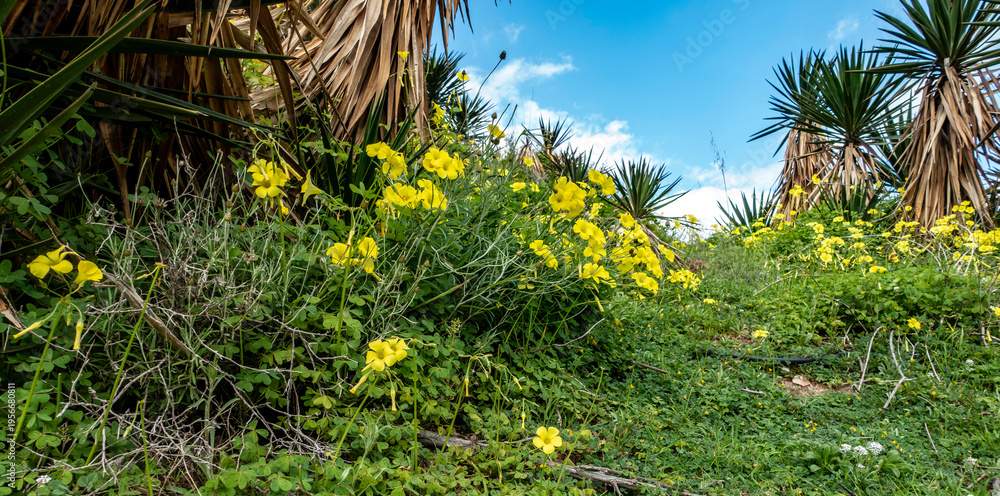
Here is how to use them well:
- Photograph the plant from several angles: whole plant, leaf close-up, stem and flower
- Use good light: shoot in daylight, not in shadow or at night
- Compare more than one source: if two apps give different answers, check a regional guide
- Match the details, not just the picture: check leaf arrangement, stem and root type too
Apps can misidentify plants, especially at the seedling stage or when a plant is damaged. Photo-based tools also struggle with lookalikes that differ only in small details.
For any plant you suspect is toxic, do not rely on an app alone.
Telling Weeds Apart From Lookalikes and Desirable Plants
Most misidentification happens between plants that share a family, a leaf shape or a growth habit. A checklist alone will not settle it.
Work through these common lookalike pairs before you pull anything. In each case, the distinguishing feature is something you can see without a microscope.
- Vegetable and flower seedlings versus weed seedlings. Self-seeded parsley, coriander, dill, poppies and calendula come up in the same beds as weeds, often in the same week. The reliable separator is leaf arrangement: check whether new leaves emerge opposite or alternate, and whether the first true leaves match the cotyledons you saw at germination. If you sowed seed in that spot, mark the row at sowing time so you have a reference.
- Lawn grass versus grass-like weeds. Many grass weeds look identical to turf until they flower. Look at the ligule, the small flap or fringe where the leaf blade meets the stem, and at how the seed head forms. A grass weed that tillers from the base and sets a distinctive seed head is easier to confirm once it flowers, so mow around a suspect patch and let it run to seed head before deciding.
- Edible greens versus toxic lookalikes. Several edible garden greens have toxic relatives with similar leaves. Do not taste-test an unknown plant. Confirm the species from at least two features, leaf arrangement plus flower, or stem shape plus root type, before treating anything as edible.
- Native and ornamental self-seeders versus weeds. Many desirable plants self-seed freely and appear as volunteers the following season. Keep a note of what you planted and where, and check whether the volunteer's leaf arrangement and stem match the parent plant before removing it.
- Clover-like plants. Clover, medick and oxalis all carry three leaflets and get lumped together. Check the leaflet shape and whether the plant has a taproot or a bulb-like base; oxalis in particular regrows from small bulbs and will return if you only pull the top.
Use this confidence check before you pull a plant:
- Did I check the growth habit and leaf arrangement?
- Did I compare at least two of the identifying features?
- Have I looked for a lookalike in the same spot?
- Am I sure it is not a seedling I planted?
- Do I know whether the plant is toxic before I handle it?
If two features point to different plants, you do not have an identification yet. Leave the plant in place, photograph it, and check again in one to two weeks when the next set of leaves or the flower opens. Careful observation is always safer than pulling something you cannot name.
Watch out: a plant that looks like a weed in a damaged or mown state can be a desirable plant that has been cut back.
Weed Prevention Methods Once You Know What You Are Dealing With
Identification only pays off if it changes what you do next.
Match the method to the life cycle.
- Annual weeds that spread by seed: the window is before seed set. Remove or cut them while flowers are still forming, and do not let them stand long enough to drop seed. Mulch the soil and keep beds covered so the seed bank is not replenished.
- Perennial weeds with roots or runners: cutting the top is not enough. Remove the root system completely, and check the area every week or two for regrowth from any root left behind. Repeated removal over a season weakens the plant more than a single deep pull.
- Creeping weeds in lawns: keep grass thick and mowed at a healthy height so it shades out new growth. A dense, well-fed lawn is the most effective long-term defence against creeping weeds.
- Weeds in garden beds: use a thick layer of mulch to block light and slow seed germination. Check beds regularly, because new seedlings can appear quickly after rain.
Time your action to the season. Seedlings are easiest to remove and are the stage most people miss.
Handle safely. Wear gloves when removing unknown plants, especially those with milky sap, hairs or spines. Some weeds cause skin irritation, and a few are toxic to children, pets and livestock.
Booking Help With a Stubborn Weed Problem
Some weeds keep coming back, even after careful removal. Deep roots, underground runners and large seed banks can make a problem hard to solve on your own.
Challenge Pest Control provides weed control services alongside general pest management for homes and businesses around Perth.
If you are not sure what you are dealing with, call us on 0422 926 291 to book a visit.
Frequently Asked Questions
How can I identify a weed in my garden?
Work through a simple sequence: note the growth habit (upright, creeping or rosette), check whether the leaves are broad or grass-like, look at how the leaves are arranged on the stem, and examine the flowers and seed heads if present. Photograph the plant from several angles and compare it against a reputable Australian weed guide or identification app. If you still cannot tell, take a clear photo of the whole plant plus a close-up of the leaf and flower to a local garden centre or pest professional before you start removing it.
What are the most common garden weeds?
Many Australian gardens are affected by a handful of recurring species, including dandelion, clover, bindii, couch grass, nutgrass and oxalis. Each has distinct features: dandelions form a basal rosette with a yellow flower, bindii spreads flat with small fern-like leaves, and oxalis has clover-like leaves that fold at night. Learning two or three of these well gives you a useful reference point for identifying others.
What is the best weed identification app?
Several weed identification apps use image recognition to suggest species from a photo, and they can help beginners narrow down possibilities quickly. Accuracy varies with photo quality and the stage of the plant, so treat any app result as a starting suggestion rather than a confirmed identification. Cross-check the suggestion against a field guide or a local expert, especially for weeds that resemble desirable plants or toxic species.
When should I get professional help with a weed problem?
Consider professional help when a weed is spreading quickly, returns after repeated removal, sits in hard-to-reach areas, or you cannot identify it with confidence. Some plants are toxic to children and pets, and a few resemble vegetables or ornamentals, so a wrong guess can be costly. Challenge Pest Control offers weed control services and provides free quotes and advice, so call to book a visit if you need a confirmed identification and a plan.