 How-to
Is Pest Control Tax Deductible for Landlords in 2026?
Last Updated: November 17, 2026
Quick Summary
Yes, in most cases pest control tax deductible for landlords covers routine treatments that keep a rental property in a rentable state, and these are usually deductible in the year you pay. Termite work can be different, so it depends on whether it is maintenance, repair or a capital improvement.
- Routine treatments during a tenancy are usually deductible as an ordinary rental expense.
- Treatments done while the property is genuinely available for rent usually qualify.
- Termite inspections and barrier maintenance are generally immediately deductible.
- Work that improves a property may be capital and claimed through depreciation instead.
- Keep invoices, proof of payment and notes showing the property was available for rent.
Table of Contents
- Pest Control as a Rental Property Expense in 2026
- When a Pest Control Cost Is Immediately Deductible
- Termite Treatment Tax Deduction for Rental Property: Repair or Capital?
- Who Pays for Pest Control: Landlord, Tenant or Strata?
- Apportioning Pest Control Costs for Mixed-Use and Part-Year Properties
- Rental Property Expense Record Keeping for Pest Control Claims
- Claiming Pest Control on Your 2026 Rental Income Return
- Frequently Asked Questions
Is pest control tax deductible for landlords in 2026? In most cases, yes. Pest control that keeps a rental property in a rentable state is generally an ordinary rental expense, and the Australian Taxation Office (ATO) allows pest control tax deductible against rental income. The detail that matters is when the cost is deductible, when it has to be spread over time, and whether it counts as a repair or a capital cost.
Pest Control as a Rental Property Expense in 2026
Pest control is a routine cost of owning a rental. If you are unsure whether a problem needs a professional assessment first, learn the signs that point to professional pest control.
To claim a deduction, the property must be genuinely available for rent or rented during the income year. Costs incurred while the property is sitting empty for personal reasons may not qualify.
- Pest control during a tenancy is usually deductible
- Routine inspections and treatments are usually deductible
- Costs tied to private use are not deductible
When a Pest Control Cost Is Immediately Deductible
Most routine pest control bills can be deducted in the year you pay them. A standard treatment that keeps pests away from a rented home is a repair or maintenance cost, and the ATO generally allows an immediate deduction for those.
Pest control during a tenancy and between tenancies
Treatments done while a tenant is living in the property are the clearest case. Treatments between tenancies can also qualify, because they prepare the property for re-letting. The key test is whether the work keeps the property in its rented condition rather than improving it.
Pest control while the property is vacant
Vacancy is where many landlords get confused. A treatment done while the property is genuinely available for rent is usually deductible. A treatment done while the property is not available for rent, such as during a long personal stay, may not be. We recommend noting the dates the property was advertised or let, so you can show it was available.
Termite Treatment Tax Deduction for Rental Property: Repair or Capital?
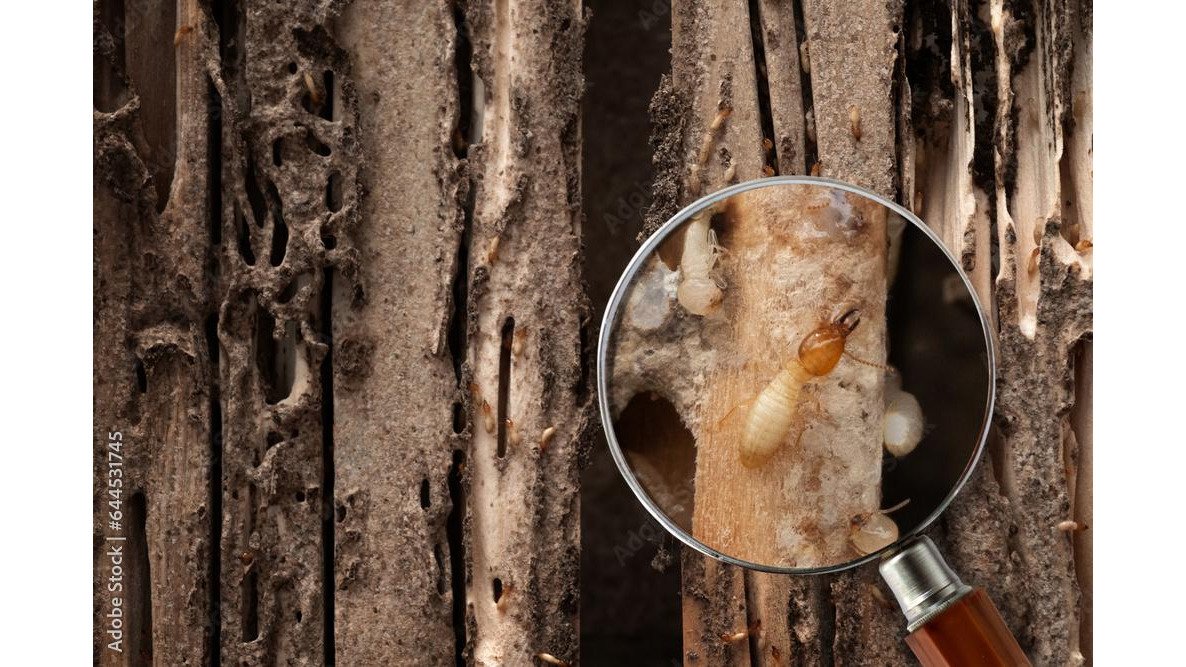
Termite work is where the answer stops being a simple yes. The ATO draws a line between work that restores a property to its previous condition and work that improves it, and termite treatment can fall on either side depending on what the job actually involves. Getting this wrong is one of the more common reasons a rental deduction is adjusted, so it is worth working through the categories before you claim.
Routine inspections and barrier maintenance
An annual termite inspection, a replenished chemical barrier, or a spot treatment of active termites in existing construction is generally treated as maintenance. These costs keep the property in the condition it was already in, and are generally treated as immediately deductible in the year the bill is paid. The same logic applies to monitoring stations and baiting programs that are part of an ongoing maintenance regime rather than a one-off build.
Remedial work after an active infestation
Where termites have caused damage and the work replaces damaged timber with like-for-like material, the repair character usually holds and the cost is generally deductible immediately. The ATO's guidance on repairs is the reference point here: restoring something to its previous condition is a repair, while replacing it with something better is not. A common pattern is a landlord replacing a damaged bearer or a section of flooring with the same species and dimensions; that is typically a repair.
When termite work becomes capital
Work is generally capital where it:
- replaces a structural element with a materially different or superior product
- adds a physical barrier, drainage system, or subfloor ventilation that did not previously exist
- forms part of a renovation, extension, or new build
Capital costs are not deducted in full in the year they are incurred. They are either claimed over time through decline in value (depreciation) for the structural or plant elements, or added to the property's cost base and accounted for when the property is sold through capital gains tax. A quantity surveyor's depreciation schedule is the usual way to work out the decline-in-value component for a capital item.
The initial repair trap
A trap that catches landlords who buy and immediately rent out a property: the ATO generally does not allow an immediate deduction for repairs to a property at the time it was acquired, where the need for those repairs existed at settlement.
Watch out: a single invoice can contain both deductible maintenance and capital work. Ask the provider to itemise the treatment, the inspection, and any structural replacement separately so each portion can be treated correctly.
A practical decision path
- Identify what the work did: maintained, restored, or improved.
- Check whether the need existed at the date the property was acquired.
- Separate routine inspection and barrier costs from structural replacement.
- For any capital portion, obtain a depreciation schedule or add the amount to the cost base.
- Keep the invoice, the inspection report, and a short note explaining the classification.
If the job is large or the property was recently purchased, confirm the split with a registered tax agent before lodging. The ATO's rental property guidance and its repairs and maintenance guidance are the authoritative sources for the 2026 income year.
Who Pays for Pest Control: Landlord, Tenant or Strata?
Responsibility for paying can be set by the lease, by law and by the building's rules.
In a strata building, common-area pests are often the strata scheme's responsibility, while pests inside a lot may fall to the owner.
Treatments done between tenancies to prepare the home for re-letting are usually the landlord's cost, and they are usually deductible to the landlord.
Apportioning Pest Control Costs for Mixed-Use and Part-Year Properties
Not every property is rented for the full year, and not every property is used only for rental. Where a home is rented for part of the year, used privately for part of the year, or has a portion used for private purposes, only the rental-related share of a pest control cost is deductible. The ATO expects a reasonable apportionment based on the extent of rental use, and the method you choose should be consistent from year to year.
The rental-days method
The most common approach for a whole-of-property cost is to count the days the property was rented or genuinely available for rent, divide by the total days in the income year, and apply that fraction to the cost.
Worked example: a property was rented for 180 days and genuinely available for rent for a further 30 days, and was used privately for the remaining 155 days. A whole-house pest treatment cost $440.
Two details matter in that calculation. First, days when the property was advertised, listed, or otherwise genuinely available for rent count toward the rental share even if no tenant was in place. Second, days of private use do not count, even if the property was also listed during that time, if it was not actually available.
Part-of-property use
Where only part of a property is rented, such as a granny flat, a converted garage, or a room in an owner-occupied home, apportion by floor area or by the number of rooms used for rental purposes. A treatment that covered the whole dwelling should be split on that basis; a treatment confined to the rented area can usually be claimed in full, provided the invoice shows the scope.
Shared and strata costs
In a strata scheme, a pest control levy or special charge that covers common property is generally deductible to the extent the lot is used to produce rental income. If the lot is rented for the full year, the rental share is typically the whole amount. If the lot was rented for part of the year, apply the rental-days method to the levy.
Costs that span more than one year
A treatment paid in one income year but covering a period that extends into the next is generally deducted in the year the expense was incurred, subject to the apportionment rules above. Where a prepaid service covers a defined period, confirm the treatment with your tax agent, because the timing rules for prepayments can affect which year the deduction falls into.
What a defensible apportionment looks like
- A written note of the rental and private-use dates for the year
- The method used (rental days, floor area, or rooms) and why it was chosen
- The calculation itself, showing the fraction and the dollar amount claimed
Watch out: switching methods between years without a reason is a common audit flag.
If the property had a mix of rental, private, and vacant periods, a registered tax agent can confirm the split before you lodge.
The article sets out how to split a pest control cost when a property is part-rented, using the rental-days method and a worked example.
| Item | Value | Note |
|---|---|---|
| Days rented | 180 | Plus days genuinely available for rent |
| Days available but not let | 30 | Counts toward rental share |
| Days of private use | 155 | Not deductible |
| Total days in year | 365 | Denominator for the fraction |
| Rental share | ≈ 0.575 | (180 + 30) ÷ 365 |
| Whole-house treatment cost | $440 | Example invoice |
| Deductible amount | ≈ $253 | Rental share of the cost |
| Private portion | ≈ $187 | Not claimed |
Rental Property Expense Record Keeping for Pest Control Claims
Good records make a deduction easy to defend. Keep every invoice, receipt and bank statement for pest control work. Each record should show the date, the provider, the service and the amount paid.
A simple checklist helps:
- Invoice with the provider's name and ABN
- Date of the treatment
- Description of the work (routine treatment, termite inspection, and so on)
Keep these records for at least five years.
Claiming Pest Control on Your 2026 Rental Income Return
Report pest control costs as a rental property expense in your 2026 tax return. Record each amount under the repairs or other rental expenses section of your rental schedule for the year the bill was paid.
If your figures are unclear, or the work is a mix of repair and capital cost, get advice before lodging.
Frequently Asked Questions
Is pest control tax deductible for landlords in 2026?
Yes, pest control is generally tax deductible for landlords in 2026 when the cost relates to a rental property that is genuinely available for rent or is rented. The Australian Taxation Office treats routine pest control as a repair and maintenance expense, which is claimed as an immediate deduction in the income year you pay for it. The deduction is reported in the rental property section of your tax return. The claim is only allowed for the rental portion of the property, so keep the invoice showing the service date and address.
Can landlords claim pest control as a rental property expense?
Landlords can claim pest control as a rental property expense when the service is carried out to keep the property in a rentable condition. Typical examples include routine spraying, rodent control and inspections. The cost must be incurred while the property is income producing or available for rent. If the property is also used privately, only the rental share of the cost can be deducted. Keep the tax invoice and record the date and the property address on each invoice.
Is termite treatment tax deductible on a rental property?
Termite treatment is often deductible when it is repair or maintenance work that restores the property to its original condition. However, if the treatment is part of a larger improvement, such as installing a termite barrier during construction or a major renovation, it may be a capital cost and must be depreciated instead. Ask for an itemised invoice that separates treatment from any structural work, so you can classify each part correctly when you lodge.
Can I claim pest control if the property was vacant?
You can claim pest control for a vacant rental property when the property is genuinely available for rent during that period. Advertising the property for lease, keeping it in a rentable state and carrying out repairs between tenancies all support a claim. Where the property was not available for rent, for example during extended private use, the cost is generally not deductible. Keep evidence such as listing records, rental advertisements and inspection reports showing the property was on the market.